
1. Set the orientation
Choose how the product must sit during packing, display and transit. Measure that orientation rather than rotating it only to reach a smaller number.
Internal size, inserts and shipping space
Start with the product in its real shipping orientation. Add every protective and presentation layer, define the usable internal cavity, then confirm the external carton and packed weight. A box label alone cannot prove fit.
Build the measurement brief
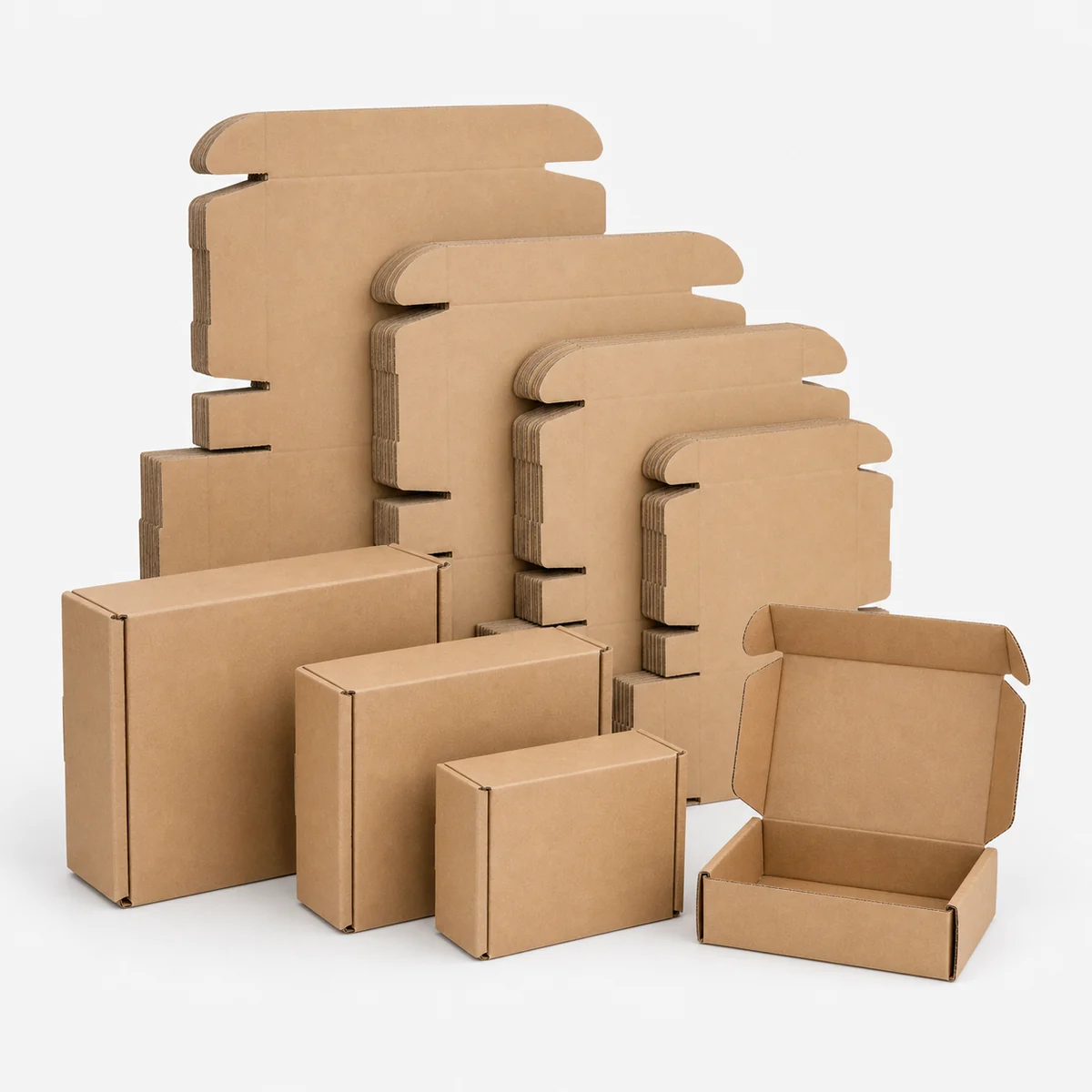
Choose how the product must sit during packing, display and transit. Measure that orientation rather than rotating it only to reach a smaller number.
Record the greatest length, width and height across normal product variation, including caps, corners, folds and protrusions.
Measure tissue, cards, pouches, wraps and decorative components in their packed state instead of treating them as negligible.
Include the actual thickness of pads, dividers, inserts and clearance required to prevent rubbing, movement or compression.
State the minimum cavity needed after all layers are included. Ask whether supplier dimensions are internal or external.
Check lid tabs, roll-over walls, dust flaps, locking ears and insert edges that can reduce usable space or obstruct closure.
Pack the heaviest and largest normal product, close the box, move it and inspect pressure points before approving production.
Confirm finished unit weight, master-carton dimensions, carton quantity and destination before relying on a freight estimate.
| Dimension | Use it for | Common mistake |
|---|---|---|
| Usable internal | Product, insert, tissue and closure fit. | Assuming it equals a catalog's external measurement. |
| Assembled external | Shelf space, mailer size, dimensional-weight review and outer-carton planning. | Using it as proof that the product cavity is large enough. |
| Flat blank or dieline | Print area, artwork placement, board yield and storage before assembly. | Confusing flat size with the assembled package. |
| Master carton | Freight, handling, storage and landed-cost review. | Estimating freight from product dimensions alone. |
The catalog locks a 10 × 10 × 4 cm assembled exterior size, three-layer extra-rigid corrugated construction, 250 gsm page paper and a listed 100 g unit wet weight. Packs of 25, 50 and 100 blank boxes are available; branding is quoted separately.
A long, flat kraft corrugated format in packs of 20, 50 or 100. Exact stock size, board grade, carton weight, branding and freight remain review-first before payment.
Ask for a marked dimension diagram and an assembled sample when fit is important. Daoyi Pack confirms the specification, source, stock, proof route, packed carton, freight and total before payment.
Use usable internal dimensions to prove product fit, then confirm external dimensions for shipping and storage. Corrugated walls, folds, inserts and lid geometry make the two values different.
There is no universal allowance. Add the measured thickness of every protective and presentation layer, include normal product variation, and approve an assembled sample.
Dimension order is unreliable without a diagram. Ask the supplier to mark each direction and label whether the values are internal or external.
That DP-BRAND-501 value is the assembled exterior size. Fit still requires usable internal measurements plus tissue, insert, product variation and closure allowance.
Send product dimensions and weight, usable internal size, inserts and protective layers, quantity, branding files, destination postcode, deadline, sample preference and required evidence.
Use the brief above, then compare the locked starter size with the review-first slim format. No custom payment is requested until the specification and packed freight basis are confirmed.